Give the session an end time, keep the display on only when you need it, and review the battery cutoff in Mouse Jiggler. No awake method removes the energy cost of keeping the Mac active.
Define the smallest useful session
Start with the work you need to finish: a reference visible for a workshop, a short export, or a transfer before leaving the desk. Estimate the duration and decide whether the screen must remain readable throughout.
For a task that can finish in the background, an illuminated display may add no value. A timed system-sleep request can suit that case better than continuous pointer activity. For a visible reference, screen brightness and the session length both deserve attention.
Apple notes that preventing or delaying sleep can increase power consumption. There is no universal battery-life figure for an awake utility: the screen, workload, model, and battery condition all affect the result.
Choose a clear stopping point
For a half-hour background session, the built-in command is:
caffeinate -i -t 1800It requests that idle system sleep be prevented for 1,800 seconds. It does not promise that a heavy job will finish before the battery runs down. Check progress and remaining charge during the session, and stop early with Control-C if the work finishes.
If you prefer Mouse Jiggler, use its Deactivate control to choose a duration or stop time. Check that a separate weekday schedule does not conflict with your intended session. See the scheduling walkthrough.
Review the battery cutoff
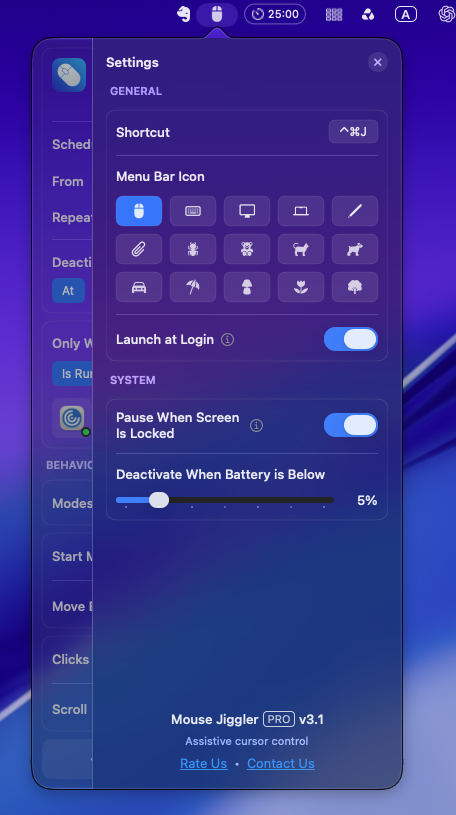
Mouse Jiggler Settings includes Deactivate When Battery is Below. Choose a threshold that leaves enough charge for what you need afterward, then confirm the selected threshold before starting. The value shown in this screenshot is an example, not a recommendation.
A cutoff stops the app’s activity; it does not guarantee that another application will stop its workload or that macOS will immediately sleep. Check the task and the system separately.
Use macOS energy controls thoughtfully
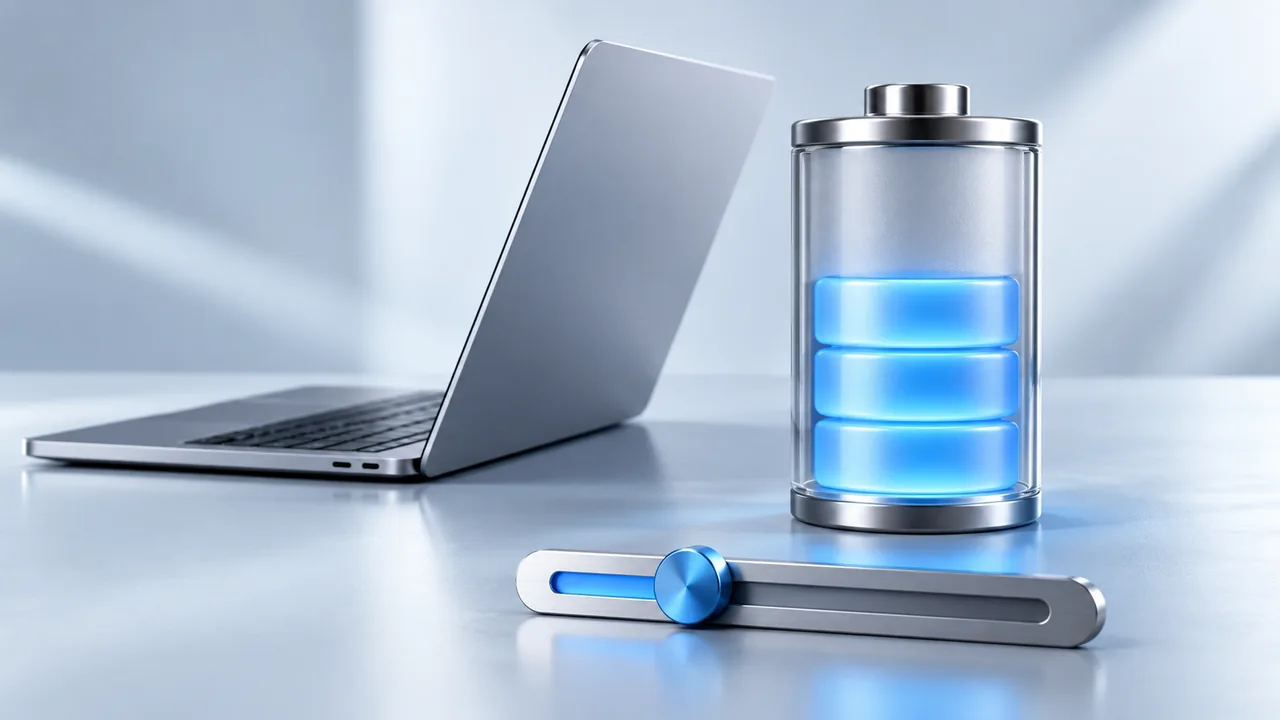
Apple recommends reducing display brightness to a comfortable level, and supported Macs provide Low Power Mode to reduce energy use. Availability and the effect on your workload depend on the Mac and its settings.
For a demanding export, test the combination you intend to use rather than assuming a lower-power mode and the same completion time. Keeping a computer awake cannot compensate for insufficient charge.
For long or unpredictable work, use a suitable power source where available. If you switch between battery and adapter during a session, check that the display and sleep settings still match the plan.
Check the result and restore the routine
- Confirm that the task actually completed.
- Stop the awake session if its timer is still running.
- Review the remaining charge and normal display timeout.
- Keep a note of the duration and workload if you will repeat the task.
If the Mac continues to stay awake after the session ends, use Activity Monitor and the power-assertion check. If it stops earlier than expected, review the battery threshold, screen-lock pause, and app conditions before treating the result as a fault.
Make your next session simpler.
Explore Mouse Jiggler’s menu-bar movement, timing, and scheduling controls.
Download for Mac